

Self Care
For a lot of common illnesses and ailments there is no specific cure and they will be relieved with time and simple remedies available without prescription. Therefore, please do not expect your doctor to prescribe a drug for every problem. Discussion and advice may be far more useful and free from side effects. Below we offer some practical advice on how to approach your ill health.
We feel it is important that all households should keep a reasonably stocked supply of over the counter medicines at home to deal with minor ailments. Remember all medicines should be stored in a box or cupboard with a lock and kept well out of the reach of children. Always check the expiry date on medicines and do not keep them for future use, as they lose their effect or become dangerous.
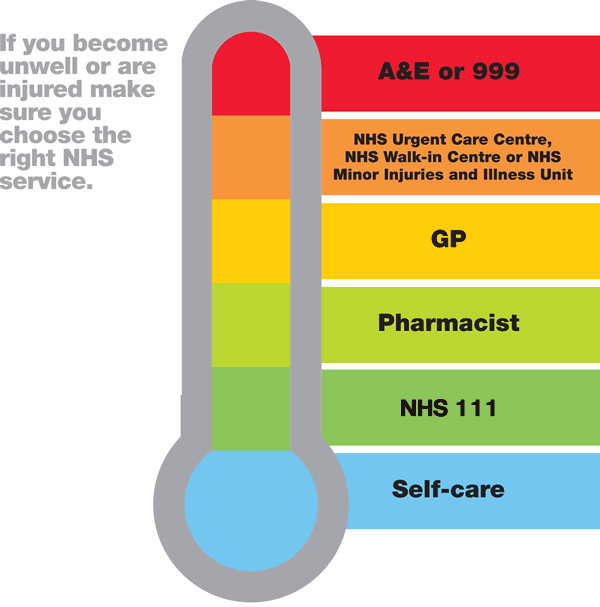
Can you treat yourself at home?
A well stocked medicine cabinet can treat many day to day illnesses. Small doses of paracetamol or ibuprofen for example can treat many common illnesses such as colds, sore throats and coughs.
Have you spoken with your pharmacist?
Pharmacists are qualified to dispense not only medicines, but also advice on a range of common complaints such as sore throats, aches and pains, colds and the flu.
They can also answer questions on medications and help you with advice on issues such as healthy eating and quitting smoking. Your pharmacist will be well placed to advise if you should see a GP with your complaint.
Have you tried NHS 111?
NHS 111 is a 24 hour a day health information and advice service staffed by professional health advisers and nurses. They offer free, confidential advice on what to do if you are ill, and provide information on a range of conditions and services, and can put you in contact with your local health, self-help & support organisations and refer you to your out-of-hours doctors service when your surgery is closed.
Call NHS 111 by dialling 111. Calls are free from landlines and mobile phones.
Do you need to see a GP or other healthcare professional?
The Glebe Family Practice offers a range of services as detailed in our medical services section. These include general medical advice and treatment, prescriptions, referral services and a range of tests and immunisations.
Remember to tell your doctor if you have tried, or are still taking, any self care remedies.
Do you need a walk-in centre or urgent treatment centre?
Before going to A&E consider if you would get the right treatment at an urgent care centre or walk-in centre.
Do you need to seek emergency hospital treatment?
In cases of accidents or illness where there is an immediate risk to life you should go to the nearest A&E department or call 999 for an ambulance.
Follow this route in critical emergencies where there has been major blood loss, severe chest pain or loss of consciousness.
Covid-19 Updates
Book your Covid booster vaccine!
*NB - We are operating a telephone triage system. If you need to see a clinician or arrange a blood test, please call us and arrange for one of the clinical team to call you back.
Online Services
If you have registered for Patient Access online patients services, you can use the website or app to request and cancel appointments, update your personal details and view your medical record online.
Remote Consultations
Our remote triage & consultation system, eConsult, allows you to fill out a simple online form to request medical advice and appointments and make administrative requests such as sick certificates and medical reports.